Skip to content
  • Home
  • Research & Academics
  • Clicking the menu button will open up an expanded version of the navigation.
    Menu
MIT School of Science
Clicking the close button will hide the expanded navigation.
  • Research and Academics
  • News
  • Resources
  • About

Academic Departments

Biology
Brain and Cognitive Sciences
Chemistry
Earth, Atmospheric and Planetary Sciences
Mathematics
Physics

Helpful Resources

Community Engagement and Student Relations
Awards and Honors
Teaching Prizes and Nominations
For Emergencies

Contact

MIT School of Science
77 Massachusetts Avenue, 6-131
Cambridge, MA 02139

Support Science

Please contact Jennifer Rosales if you are considering a gift to the School of Science.

Give now


Social Media

  • X
  • Instagram
  • LinkedIn
Pause Video

Science Meets AI

Science Meets AI

Synergies in Science and AI

Science Meets AI

Across MIT, researchers are using AI to build advanced robots, predict group decisions, and identify anomalies in unwieldy datasets. Biologists are using AI to annotate medical scans. Chemists are using it to interpret the structure and function of molecules. Cognitive scientists are using large language models, a type of AI trained on text, to understand the basis of human language. And that’s just the beginning; the integration of science and AI is a two-way process. MIT scientists are leveraging advances in computing to answer increasingly complex questions while contributing to the next generation of artificial intelligence tools.
Highlights

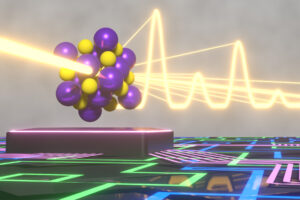
X-ray Crystallography

AI model can reveal the structures of crystalline materials

X-ray Crystallography

MIT chemists have now come up with a new generative AI model that can make it much easier to determine the structures of these powdered crystals. The prediction model could help researchers characterize materials for use in batteries, magnets, and many other applications.

Read it at Science@MIT →

Quote from Kaiming He Douglas Ross (1954) Career Development Professor of Software Technology in the Department of Electrical Engineering and Computer Science

Science and AI are not isolated subjects. We have been approaching the same goal from different perspectives, and now we are getting together.

Kaiming He

Douglas Ross (1954) Career Development Professor of Software Technology in the Department of Electrical Engineering and Computer Science

AI meets particle physics

New perspectives on old questions

AI meets particle physics

Jessie Micallef

Jessie Micallef is a fellow at the National Science Foundation’s AI Institute for Artificial Intelligence and Fundamental Interactions (IAIFI), a collaboration of MIT, Harvard, Northeastern, and Tufts experts applying artificial intelligence to physics research. Through IAIFI, Micallef collaborates with researchers across partner institutions and a tight-knit community of early-career fellows examining everything from astrophysics to particle interactions. Micallef studies the neutrino, an abundant subatomic particle that remains elusive to scientists.

Read it in Science@MIT →

The Team

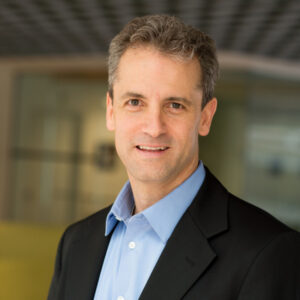
  • Jim DCarlo

    Jim DiCarlo

    Professor

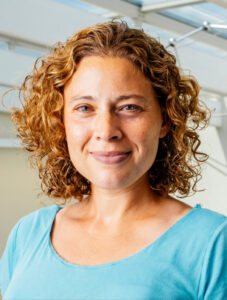
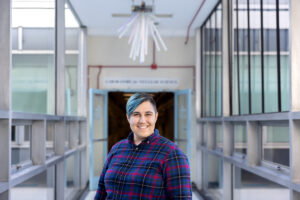
  • Danna Freedman

    Professor

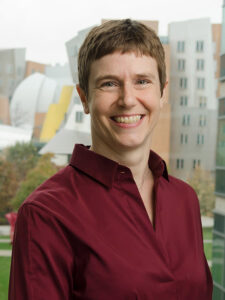
  • A shite woman with short dark hair and a red buttondown shirt stands inside her lab overlooking Hockfield court.

    Amy E. Keating

    Professor

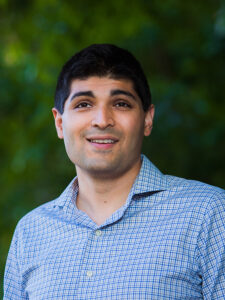
  • A man with dark hair and a blue buttondown shirt stands outside

    Ankur Moitra

    Professor

  • A white woman with short red hair and a black shirt stands outside

    Noelle Selin

    Professor

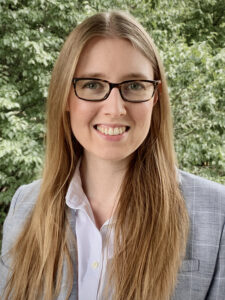
  • A white woman with blonde hair and glasses stands outside in a button-down shirt

    Phiala Shanahan

    Associate Professor

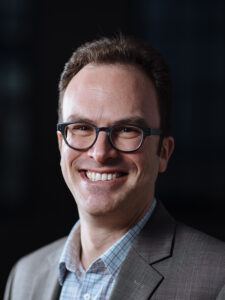
  • Headshot of a white man with glasses in a gray blazer and blue buttondown shirt

    Jesse Thaler

    Professor

News

  • AI to help researchers see the bigger picture in cell biology

    February 25, 2026

  • Exposing biases, moods, personalities, and abstract concepts hidden in large language models

    February 19, 2026

  • Accelerating science with AI and simulations

    February 12, 2026

  • Using synthetic biology and AI to address global antimicrobial resistance threat

    February 11, 2026

  • AI algorithm enables tracking of vital white matter pathways

    February 10, 2026

  • “This is science!” – MIT president talks about the importance of America’s research enterprise on GBH’s Boston Public Radio

    February 6, 2026

Please contact Jennifer Rosales if you are considering a gift to Science and Artificial Intelligence at MIT (SAIM).

Give Now

Next Up

Editing Ourselves

With the CRISPR system, researchers can diagnose, detect, and potentially treat a host of diseases within the body using gene editing.

MIT School of Science
  • Biology
  • Brain and Cognitive Sciences
  • Chemistry
  • Earth, Atmospheric and Planetary Sciences
  • Mathematics
  • Physics
MIT School of Science
77 Massachusetts Avenue, 6-131
Cambridge, MA 02139
  • X
  • Instagram
  • LinkedIn
  • Research and Academics
  • About
  • Resources
  • Support Science
  • Contact
  • Massachusetts Institute of Technology
  • Accessibility
  • For Emergencies
  • © 2026 MIT School of Science