Skip to content
  • Home
  • Research & Academics
  • Clicking the menu button will open up an expanded version of the navigation.
    Menu
MIT School of Science
Clicking the close button will hide the expanded navigation.
  • Research and Academics
  • News
  • Resources
  • About

Academic Departments

Biology
Brain and Cognitive Sciences
Chemistry
Earth, Atmospheric and Planetary Sciences
Mathematics
Physics

Helpful Resources

Community Engagement and Student Relations
Awards and Honors
Teaching Prizes and Nominations
For Emergencies

Contact

MIT School of Science
77 Massachusetts Avenue, 6-131
Cambridge, MA 02139

Support Science

Please contact Jennifer Rosales if you are considering a gift to the School of Science.

Give now


Social Media

  • X
  • Instagram
  • LinkedIn
Pause Video

Human Health

Human Health

Leading in Life Sciences

Human Health

MIT School of Science has world-class expertise to catalyze discovery, innovation, and impact for human health. Faculty and researchers in the school participate in initiatives such as the MIT Health and Life Sciences Collaborative (MIT HEALS) that support the convergence of talent and resources. Drawing on the Institute’s strengths in life sciences and other fields, our leading experts will form new, cross-disciplinary ventures—and build on existing successes—that connect MIT to industry leaders in biotechnology, pharmaceuticals, and hospitals.

Highlights

Natural Born Killers

Engineered “natural killer” cells could help fight cancer

Natural Born Killers
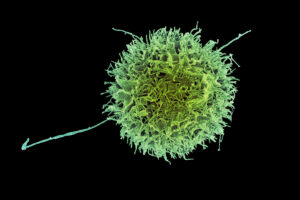
A human natural killer cell

One of the newest weapons that scientists have developed against cancer is a type of engineered immune cell known as CAR-NK (natural killer) cells. Similar to CAR-T cells, these cells can be programmed to attack cancer cells. MIT and Harvard Medical School researchers have now come up with a new way to engineer CAR-NK cells that makes them much less likely to be rejected by the patient’s immune system, which is a common drawback of this type of treatment.

Read it at MIT News →

Tumor Tacklers

“Bottlebrush” particles deliver big chemotherapy payloads directly to cancer cells

Tumor Tacklers
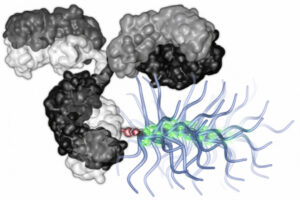
Chemotherapy drugs carried by a bottlebrush polymer

MIT researchers including chemistry professor Jeremiah Johnson have shown that chemotherapy drugs carried by a bottlebrush polymer (green and blue molecule) can be attached to an antibody, which guides the molecule to a tumor. This approach could avoid many of the side effects of systemic chemotherapy delivery.

Read it at MIT News →

Quote from James Poitras ’63 James Poitras ’63 have committed $8 million to the Poitras Center for Psychiatric Disorders Research to launch pioneering research initiatives aimed at uncovering the brain basis of major mental illness and accelerating the development of novel treatments.

Federal funding rarely supports the kind of bold, early-stage research that has the potential to transform our understanding of psychiatric illness.

James Poitras ’63

James Poitras ’63 have committed $8 million to the Poitras Center for Psychiatric Disorders Research to launch pioneering research initiatives aimed at uncovering the brain basis of major mental illness and accelerating the development of novel treatments.

MIT HEALS

MIT and Mass General Brigham launch joint seed program to accelerate innovations in health

MIT HEALS
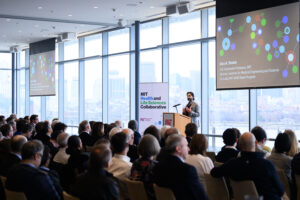
Alex Shalek speaks in front of seated audience

Leveraging the strengths of two world-class research institutions, MIT and Mass General Brigham (MGB) recently celebrated the launch of the MIT-MGB Seed Program. The new initiative, which is supported by Analog Devices Inc. (ADI), will fund joint research projects led by researchers at MIT and Mass General Brigham. These collaborative projects will advance research in human health, with the goal of developing next-generation therapies, diagnostics, and digital tools that can improve lives at scale.

Read it at MIT News →

Plant Power

MIT chemists boost the efficiency of a key enzyme in photosynthesis

Plant Power

A growing plant in front of the sun.

MIT chemists, including chemistry professor Matthew Shoulders, have shown that they can greatly boost the efficiency of a bacterial version of rubisco, a key enzyme in photosynthesis. They identified mutations that could boost its catalytic efficiency by up to 25 percent.

Read it at MIT News →

MIT Heals

Introducing MIT HEALS, a life sciences initiative to address pressing health challenges

MIT Heals
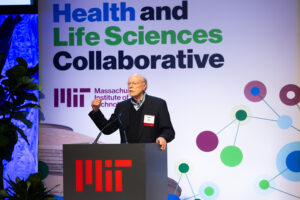
Phillip Sharp speaks at the podium

At MIT, collaboration between researchers working in the life sciences and engineering is a frequent occurrence. Under a new initiative launched last week, the Institute plans to strengthen and expand those collaborations to take on some of the most pressing health challenges facing the world. The new MIT Health and Life Sciences Collaborative, or MIT HEALS, will bring together researchers from all over the Institute to find new solutions to challenges in health care. HEALS will draw on MIT’s strengths in life sciences and other fields, including artificial intelligence and chemical and biological engineering, to accelerate progress in improving patient care

Read it at MIT News →

The Team

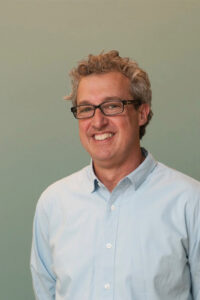
  • Headshot of Facundo Batista

    Facundo Batista

    Associate Director and Scientific Director, Ragon Institute of MGH, MIT, and Harvard

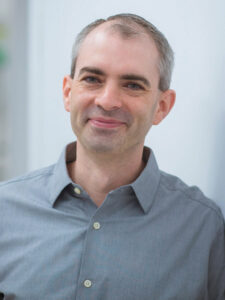
  • Headshot of Chris Burge

    Christopher Burge

    Program Director, Computational and Systems Biology

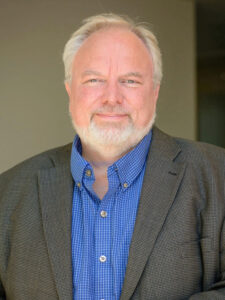
  • Headshot of Iain Cheeseman

    Iain Cheeseman

    Associate Director, MIT Health and Life Sciences Collaborative

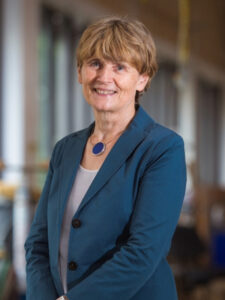
  • Headshot of Troy Littleton

    Troy Littleton

    Professor

  • Headshot of Ruth Lehmann

    Ruth Lehmann

    Director, Whitehead Institute

  • Headshot of Elly Nedivi

    Elly Nedivi

    Professor

  • Headshot of Matthew Vander Heiden

    Matthew Vander Heiden

    Director, Koch Center for Integrative Cancer Research

  • Headshot of Yukiko Yamashita

    Yukiko Yamashita

    Professor

News

  • Phil Sharp-Alnylam Fund for Emerging Scientists to support MIT biology graduate students and faculty

    November 12, 2025

  • Angela Koehler, Iain Cheeseman, and Katharina Ribbeck are shaping the collaborative as a platform for transformative research, translation, and talent development across MIT.

    December 12, 2025

  • Engineered “natural killer” cells could help fight cancer

    October 8, 2025

  • Biologists identify targets for new pancreatic cancer treatments

    May 8, 2025

  • New initiative to advance innovations in pediatric care

    April 11, 2025

Please contact Jennifer Rosales if you are considering a gift to the School of Science.

Give Now

Next Up

Editing Ourselves

With the CRISPR system, researchers can diagnose, detect, and potentially treat a host of diseases within the body using gene editing.

MIT School of Science
  • Biology
  • Brain and Cognitive Sciences
  • Chemistry
  • Earth, Atmospheric and Planetary Sciences
  • Mathematics
  • Physics
MIT School of Science
77 Massachusetts Avenue, 6-131
Cambridge, MA 02139
  • X
  • Instagram
  • LinkedIn
  • Research and Academics
  • About
  • Resources
  • Support Science
  • Contact
  • Massachusetts Institute of Technology
  • Accessibility
  • For Emergencies
  • © 2025 MIT School of Science