Letter from the Dean
Winter 2026
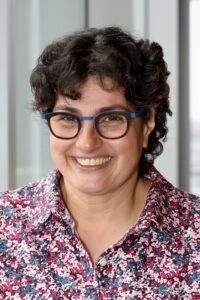
Photo by Allegra Boverman. School of Science Dean Nergis Mavalvala.
Dear alumni and friends,
As we welcome a new year, I’m pleased to share this issue of MIT Science. This issue reflects the vibrancy and depth of research across the School of Science, and the extraordinary people and partnerships driving our mission forward.
We begin by celebrating the launch of the School’s new Postdoctoral Fellowship program, made possible by the Fund for the Future of Science. This fellowship program supports outstanding early-career researchers across disciplines—from quantum chemistry and atmospheric modeling to protein biology and mathematical physics. These fellows represent the next generation of scientific leadership, and their work exemplifies the intellectual curiosity and collaborative spirit that define MIT.
We are also thrilled to join the international consortium constructing the Giant Magellan Telescope (GMT), a $2.6 billion telescope in Chile that will redefine our view of the universe. Enabled by a visionary gift from Terry and Susan Ragon, MIT’s participation strengthens U.S. leadership in astronomy and instrumentation, and opens up new opportunities for our researchers and students at the MIT Kavli Institute for Astrophysics and Space Research to explore the cosmos.
I’ll never forget the moment that Terry walked into my office and said, with that unmistakable spark in his eye, “I want to support MIT joining the GMT.” I knew then that something remarkable was about to unfold. It was a moment of clarity, generosity, and shared purpose that I will always treasure.
As we look toward a future with MIT scientists joining the GMT, I cannot help think of my beloved mentor, teacher and colleague, the late Rai Weiss. Rai was not only a towering figure in astrophysics, but a beloved member of our MIT community. His pioneering work on gravitational wave detection through LIGO opened a new window on the universe, confirming Einstein’s century-old predictions and forever changing how we observe the cosmos. Now, upon the 10th anniversary of the first gravitational wave detection, we can envision what LIGO and GMT will uncover when their powers combine.
This issue also highlights several transformative philanthropic gifts that are expanding the frontiers of research and education. A $20 million gift from the Leinweber Foundation, alongside a $5 million commitment from the School of Science, establishes the MIT Center for Theoretical Physics – A Leinweber Institute. This landmark investment will support graduate students, postdocs, and faculty in theoretical physics, and foster collaboration across a new national network of institutes.
Also in this issue, you’ll read about the appointment of Professor Matthew Shoulders as the new head of the Department of Chemistry. A leading researcher in protein folding and engineering, Matt brings scientific excellence and a deep commitment to community building to the department. You can read about a major advance in photosynthesis research from the Shoulders Lab, where MIT chemists have used directed evolution to improve the efficiency of rubisco—one of the most important and least efficient enzymes in nature. This work holds promise for enhancing crop yields and addressing food security through molecular innovation.
Finally, we recognize two major gifts in the Department of Biology. With funding from the W.M. Keck Foundation, Assistant Professor of Biology Alison Ringel will investigate the intersection of immunology and aging biology, aiming to define the mechanisms that underlie aging-related decline. In addition, the establishment of the Phil Sharp–Alnylam Fund for Emerging Scientists—a flexible funding resource created in honor of Nobel Laureate Phil Sharp and funded by Alnylam Pharmaceuticals—underscores the importance of sustaining the pipeline of scientific talent in a time of uncertain federal support.
Taken together, the stories in this issue reflect the power of partnership—between researchers and donors, between disciplines, and between generations. They remind us that science is not only a pursuit of knowledge, but a shared endeavor to improve the human condition.
Thank you for being part of our community. Your support helps us nurture talent, pursue bold ideas, and bolster a strong future for science.
With warm regards,
Dean Nergis Mavalvala PhD ’97