Meet the Future of Science
This fall, MIT School of Science welcomes the second cohort of its prestigious Postdoctoral Fellowship program. Spanning all areas of science, these postdocs represent the future of their fields—and science’s future discoveries.
Made possible by a generous grant from alumni and friends, the Fund for the Future of Science is the basis for support this new postdoctoral program based on other successful postdoc programs such as Physics’ Pappalardo Fellows program funded by A. Neil Pappalardo, EE ’64, an MIT alumnus with a long history of generosity to both the Institute and the Department of Physics.
Last issue, Science@MIT featured one of these talented, young scientists, Jess Speedie. (See our Summer 2025 issue). Here, we present a shortened version of profiles for all of our new postdocs. You can read their full profiles at science.mit.edu, at their home department news pages, or later at MIT News.
Amanda Burcroff
Unlocking mysteries of the cosmos through math
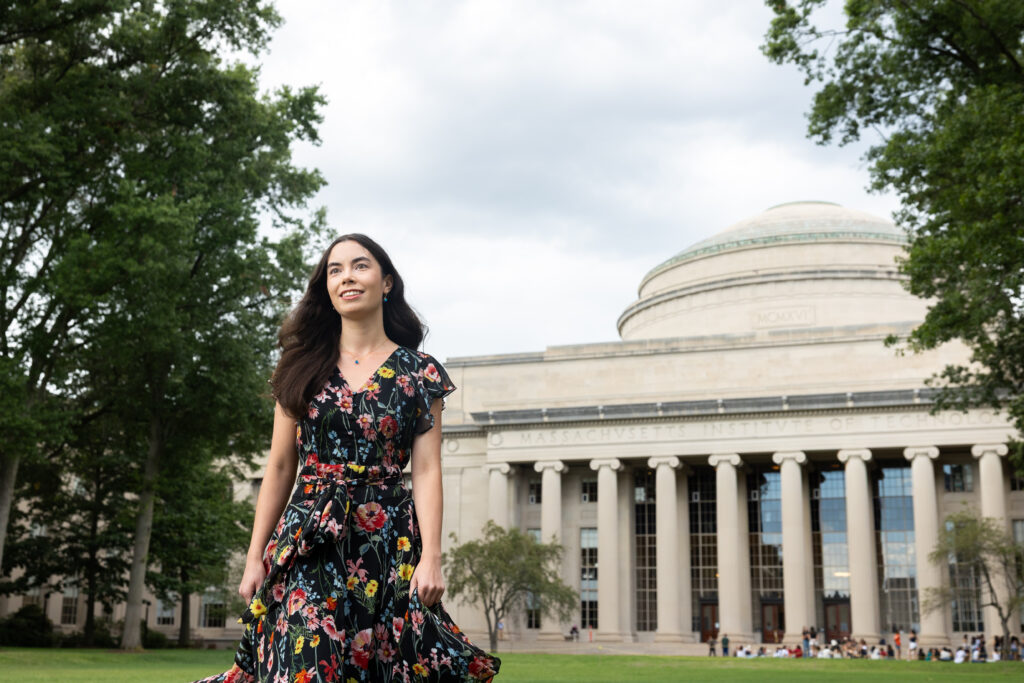
Amanda Burcroff’s research is focused on algebraic combinatorics, an area which provides discrete frameworks for understanding algebraic and geometric spaces that ubiquitously arise across science. Working with Professor Alexander Postnikov in Department of Mathematics, Burcroff aims to build upon her techniques with the goal of applying them to other fields such as theoretical physics — a field that seeks to uncover the fundamental laws governing everything from subatomic particles to the cosmos itself.
“I have trust that if you keep following the path, eventually you’ll find the treasure — that is whatever theorem or proof — that you’re looking for,” she says.
Exploring possibilities and redefining rules
In elementary school, Burcroff only saw math as a subject that entailed lots of memorizing. Although she felt that it came naturally to her, she didn’t always find math very interesting.
In high school, as she came to learn about areas like calculus and geometry, Burcroff started to see the discipline in a different light — a creative approach to exploring what’s possible.
“[In] most other fields, the rules are imposed on you by the world,” she says. “But in math, you get full freedom to lay down those rules and then figure out what the implications of those rules are by using logical consequence.”
In 2015, Burcroff began her bachelor’s degree at the University of Michigan with a major in math and a minor in computer science. There, she entered the world of combinatorics — a branch of math dealing with counting, arranging, and combining objects that forms a crucial basis for understanding the complexity of problems as well as the limits of computer algorithms.
“When I was starting out, I was just happy to have any mystery that anyone gave me,” she says.
Math was, to Burcroff, like a fun game with levels to complete. But during a study abroad program in Budapest, Hungary — the hometown of Paul Erdős, who is considered to be one of the most prolific mathematicians of the 20th century — it became more exciting to play when she was handed puzzles no one has yet solved.
“It turns out that if you put down the right set of rules, there’s an infinite number of beautiful things that you can do with it,” she says.
A journey of endless mysteries to unlock
In 2019, Burcroff embarked on a journey to pursue further research in England, later completing a master’s degree in Pure Mathematics at the University of Cambridge then a research master’s degree at Durham University. In 2021, she returned to the United States and began her PhD at Harvard University with the guidance of Professor Lauren Williams.
Among several riddles she has unraveled over the years, Burcroff helped unify different mathematical approaches to understand why systems work so reliably. Think of it as finding out that two seemingly different set of instructions actually lead the same way. By demonstrating their connections, her work has revealed an underlying, overarching mathematical architecture — a finding that later helped Burcroff and her collaborators tackle one of the many enduring riddles in her field.
Generalized cluster algebras form the basis for describing geometries that appear throughout physics. For more than a decade, mathematicians suspected these building blocks were created only by adding up ingredients and never subtracting, though no one was able to prove it. In 2024, Burcroff and her collaborators published a paper demonstrating that these spaces have nice positivity properties by developing a new way to count and organize patterns — helping untangle a long-standing conjecture, whose potential implications span from predicting particle collision outcomes to describing the spaces appearing in string theory.
Despite the tremendous number of problems she has answered, new ones keep arising. “Every time you unlock one of them, it gives you a bunch of paths to new connected mysteries,” Burcroff says.
Sopuruchukwu Ezenwa
Cracking the catalysis code that powers a trillion-dollar industry
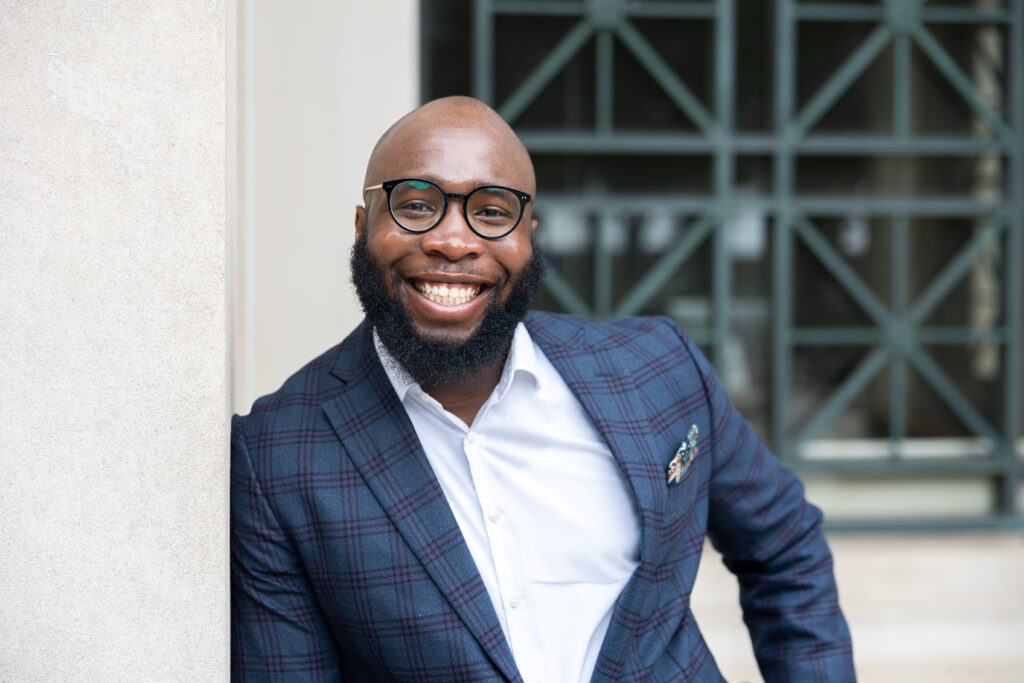
Electrochemistry — during which one reactant supplies electrons while another receives them — underpins many everyday phenomena like battery charging and iron rusting. While this field is becoming increasingly crucial with the global push towards renewable energy and decarbonization, current understanding of these many catalytic processes remains limited.
By bridging concepts from electrochemistry and thermochemical catalysis — historically studied separately — chemical engineer Sopuruchukwu Ezenwa is uncovering how electric fields that spontaneously form during reactions can be harnessed to influence how chemical transformations occur. This research offers vast potential in improving the selectivity and efficiency of many large-scale industrial catalytic processes where charge transfer reactions may play a key role.
Now working as a postdoc in the School of Science Dean’s Fellow program at MIT’s Department of Chemistry, Ezenwa’s goal is to help make chemical manufacturing more effective and sustainable by developing better methods to study and control catalysis.
“How can we ensure that the ways that we produce chemicals and energy are much more efficient, in ways that they can serve our future generation? That’s something I deeply care about,” Ezenwa says.
Ezenwa grew up in Aba, a commercial hub of eastern Nigeria where crude oil facilities dotted the landscape but electricity grids consistently failed. While energy has become more stable today, back then, outages would repeatedly happen for weeks and sometimes even months.
In 2012, he began studying petroleum engineering — a career that pays well in a nation that serves as Africa’s largest oil producer. However, just shortly after, lecturers nationwide went on strike after the government failed to implement a previously agreed deal. With universities paralyzed for nearly half a year, Ezenwa decided to seek education abroad.
Ezenwa got accepted to study chemical engineering at Tufts University with a full scholarship. At Tufts, Ezenwa was first captivated by the ubiquity of catalysis during a lecture by Prashant Deshlahra, a professor of chemical and biological engineering. With the guidance of Deshlahra — whose interest lies in reactions involving catalysts and reactants of different phases — he explored how to use catalysis to selectively guide hydrocarbon oxidation to form desired products.
In 2018, he carried his research on to Purdue University, where he worked with his PhD advisor, Rajamani Gounder, director of the Purdue Catalysis Center. There, he studied zeolites, a group of minerals containing aluminum and silicon oxides that are commonly found in nature, cheap to synthesize, and widely-used in the chemical industry.
With physical properties resembling that of sand, zeolites’ unique internal architecture is composed of uniform, interconnected pores and channels that allow certain molecules to enter while blocking others. Within this microscopic maze, highly reactive spots called Brønsted acid sites can drive desired chemical transformations once the right molecule enters them.
Using a combination of precise synthesis techniques and kinetic measurements, Ezenwa developed ways to control where these acid sites form within the zeolite’s structure. By tracking reaction rates and product distributions, he also demonstrated that confining these reactive sites to smaller spaces could boost the selective production of para-xylene — a key ingredient in PET plastics — to 80 percent efficiency, compared to just 30 percent when the sites were scattered throughout larger pores.
At MIT, Ezenwa started to explore yet another new frontier. In late 2024, Ezenwa began studying electrochemical catalysis, a separate field from the thermochemical catalysis he focused on during his PhD. He now works as a postdoc with Yogesh Surendranath, Donner Professor of Science and Professor of Chemistry and Chemical Engineering, whose lab addresses challenges in energy conversion and sustainability by manipulating charge transfer reactions at catalytic interfaces.
“Ezenwa stood out because of his thirst to broaden his horizons during his postdoc,” says Surendranath. “His interest in learning a field he’d never been exposed to really spoke to his intellectual curiosity and boldness.”
Ursula Jongebloed
Learning about the earth’s climate by studying a history frozen in ice
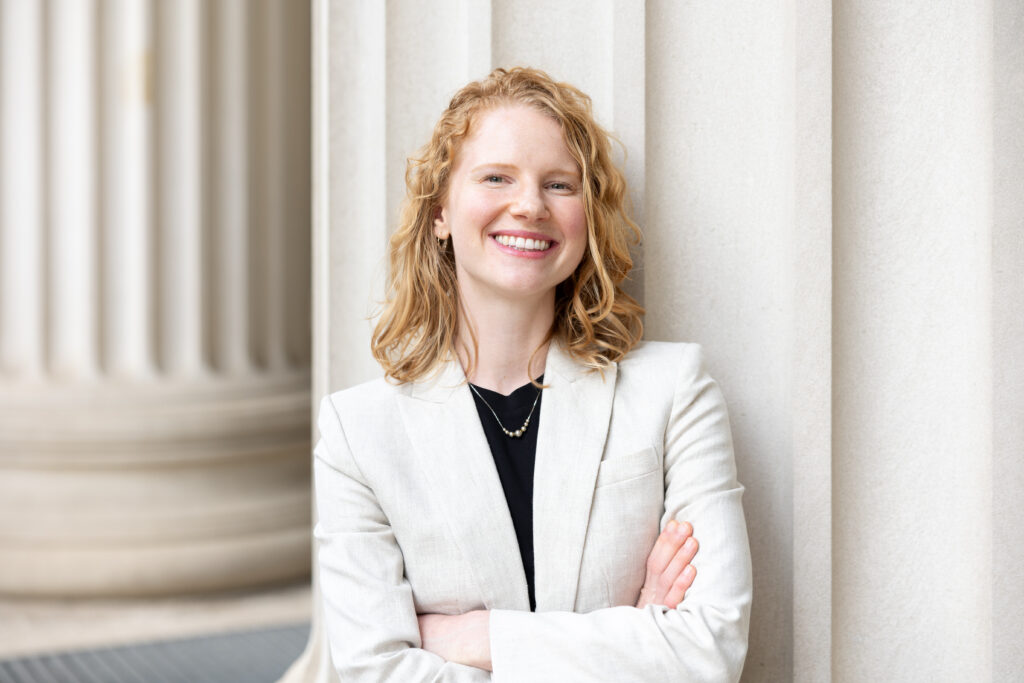
About 600 years ago, Greenland was home to just a few thousand Vikings and Inuit people. The air looked and felt very different compared to how it does today.
“In some ways, we still don’t really know what the atmosphere looked like before humans started [polluting it],” says atmospheric chemist Ursula Jongebloed who has used ice cores to study this history.
This year, Jongebloed joins MIT’s Department of Earth, Atmospheric and Planetary Sciences (EAPS) working with Arlene Fiore, the Peter H. Stone and Paola Malanotte Stone Professor and Associate Department Head. She aims to use modeling to better understand how aerosols and oxidants have interacted with the atmosphere over the industrial era — addressing one of the biggest gaps in predicting future climate.
A love of learning
Growing up in San Francisco’s Bay Area, she was awed by the coastal cliffs, redwoods, and tide pools she explored on school field trips and family vacations. In middle school, her fascination turned microscopic.
“When you look at a glass of water — to the eye, it doesn’t really look that complicated right?” she says. “But the reality that things are constantly colliding, interacting, breaking apart, and forming new bonds was pretty mind-blowing to me when I learned that.”
That curiosity led her to study chemistry and earth sciences at Dartmouth College. In one class on atmospheric chemistry, she was struck by how much sea levels have risen and fallen and how drastically the polar ecosystems have changed over millions of years.
Today, as human activity accelerates those shifts, Jongebloed digs into Earth’s frozen archives to understand what came before — and what might come next.
Digging up a frozen history
Over thousands of years, falling snow has compressed into ice and formed glaciers that preserve relics of the past. Whether insect fragments, pollen grains, volcanic ash, or air bubbles, each of these artifacts can help scientists paint a picture of life during each period. Among artifacts like insect fragments, pollen grains, volcanic ash, and air bubbles. Among them, Jongebloed focuses on chemical traces called sulfate aerosols.
Typically formed during volcanic eruptions or the burning of fossil fuels when sulfur dioxide reacts with gases in the atmosphere, these tiny airborne particles play a critical role in cooling the planet by reflecting sunlight. To understand how sulfate sources and chemistry have changed over time, Jongebloed studied a 217-meter ice core collected from Greenland.
By analyzing the frozen cylinder — measuring about as long as two football fields placed end to end — Jongebloed and her team uncovered 650 years of atmospheric history from 1200 to 1850 C.E. that led to a series of findings.
In 2023, they published a paper revealing that dormant volcanoes quietly release up to three times as much sulfur into the Arctic atmosphere than estimated by current climate models. In the same year, they also showed that sulfur emissions from marine phytoplankton in the North Atlantic have remained relatively stable, in contrary to the declining populations suggested in previous studies.
In another paper, Jongebloed provided first long-term record distinguishing natural from manmade sulfate sources in the Arctic.
“It was totally an ‘A ha!’ moment,” she recalls.
At MIT, Jongebloed aims to expand her focus beyond sulfur by working with Fiore, whose lab at EAPS specializes in complex, computationally intensive models of atmospheric chemistry and pollution.
“I suspect she’ll catalyze some new research directions while also serving as a bridge to the laboratory work in the Kroll Lab” in the Department of Civil and Environmental Engineering (CEE).
Jongebloed will also collaborate with Jesse Kroll, the Peter de Florez Professor, whose experimental research focused on characterizing organic compounds in the Earth’s atmosphere, will help complement her modeling work.
Sergei Kotelnikov
Building the blocks of life
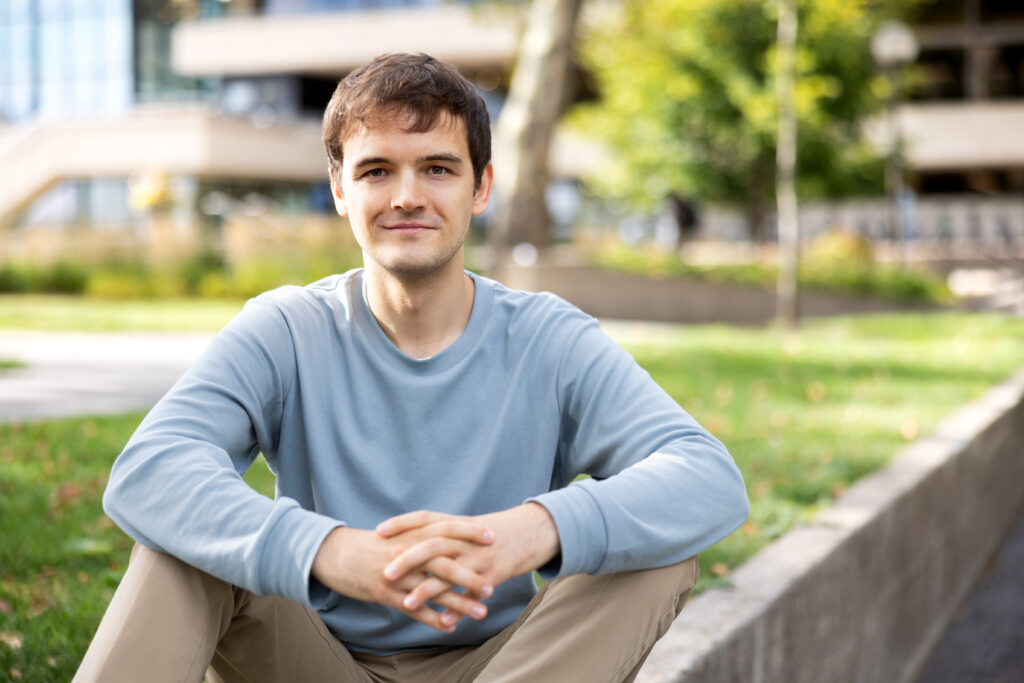
Billions of years ago, simple organic molecules drifted across Earth’s primordial landscape — nothing more than basic chemical compounds. But as natural forces shaped the planet over hundreds of millions of years, these molecules began to interact and bond in increasingly complex ways. Along the way, something spectacular emerged: life.
“Life is to some degree magical,” says computational biologist Sergei Kotelnikov. Simple organic compounds congregate into polymers, which assemble into living cells and ultimately organisms — the whole being greater than the sum of its parts.
Kotelnikov builds models to analyze and predict the structure of these biomolecules, particularly proteins, the fundamental building blocks of every organism. This year, he joins to work with Professor Amy Keating’s lab, where researchers focus on protein structure, function, and interaction. Using machine learning, his goal is to develop new methods in protein modeling with potential applications that span from medicine to agriculture.
A hunger for problems to solve
Kotelnikov grew up in Abakan, Russia, a small city sitting right in the center of Eurasia. As a child, one of his favorite pastimes was playing with LEGOs. “It encouraged me to build new things, rather than just following instructions,” he says. “You can do anything.”
In 2012, Kotelnikov began his bachelor of science in Physics and Applied Mathematics at the Moscow Institute of Physics and Technology (MIPT) — considered one of the leading STEM universities in Russia and globally — and continued there for his master’s degree. It was there that biology came into the picture.
During a course on statistical physics, Kotelnikov was first introduced to the idea of the “emergence of complexity.” He became fascinated by this “mysterious and attractive manifestation of biology[…] this evolution that sharpens the physical phenomenon” to create, drive, and shape life as we know it today. By the time he completed his master’s degree, he realized he had only scratched surface of the field of computational biology.
In 2018, he began his PhD at Stony Brook University in New York and began working with Dima Kozakov, who is recognized as one of the world’s leaders in predicting protein interactions and complex structures.
Studying the architecture of life
Proteins act like the bricks that construct an organism, underpinning almost nearly every cellular process from tissue repair to hormone production. Like pieces of a LEGO tower, their structures and interactions determine the functions that they carry out in a body.
However, diseases arise when they’re folded, curled, twisted, or connected in unusual ways. To develop medical interventions, scientists break down the tower and examine each individual piece to find the culprit and correct their shape and pairing. With limited experimental data on protein structures and interactions currently available, simulations developed by computational biologists like Kotelnikov provide crucial insight that inform fundamental understanding and applications like drug discovery.
With the guidance of Kozakov at Stony Brook’s Laufer Center for Physical & Quantitative Biology, Kotelnikov carried over his understanding of physics to create modeling methods that are more effective, efficient, reliable and generalizable. Among them, he developed a new way of predicting the protein complex structures mediated by proteolysis-targeting chimeras, or PROTACs, a new class of molecules that can trigger the breakdown of specific proteins previously considered undruggable, such as those found in cancer.
At MIT, Kotelnikov will work with Amy Keating, department head and the Jay A. Stein (1968) Professor of Biology, and Professor of Biological Engineering to study protein structure, function, and interactions.
By infusing physics with machine learning, Kotelnikov’s goal is to advance modeling methods that can vastly inform applications such as cancer immunology and crop protection.
Kotelnikov is also planning to work with Professors Tommi Jaakkola and Tess Smidt in MIT’s Department of Electrical Engineering and Computer Science (EECS) to explore a field called geometric deep learning. In particular, he aims to integrate physical and geometric knowledge about biomolecules into neural network architectures and learning procedures.
Ernest Opoku
Quantum modeling for breakthroughs in materials science and sustainable energy
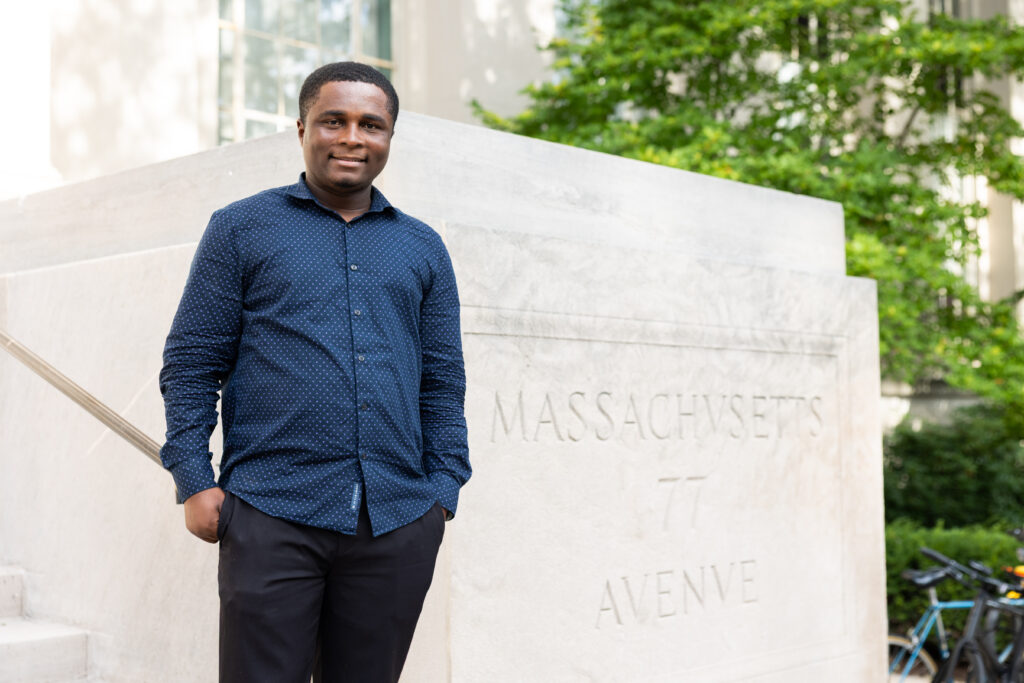
Ernest Opoku knew he wanted to become a scientist since he was a little boy. But his school in Dadease, a small town in Ghana, offered no elective science courses — so Opoku created one for himself.
Even though they had neither a dedicated science classroom nor a lab, Opoku convinced his principal to bring in someone to teach him and five other friends he had convinced to join him. With just a chalkboard and some imagination, they learned about chemical interactions through the formulas and diagrams they drew together.
“I grew up in a town where it was difficult to find a scientist,” says Opoku, who is now a quantum chemist.
This year, he joins MIT as a part of Professor Troy Van Voorhis’ research group in the Department of Chemistry. Opoku’s goal is to advance computational methods to study how electrons behave — a fundamental research that underlies applications ranging from materials science to drug discovery.
In pursuit of knowledge
“As a boy who wanted to satisfy my own curiosities at a young age, in addition to the fact that my parents had minimal formal education,” Opoku says, “I knew that the only way I would be able to accomplish my goal was to work hard.”
He studied diligently and was able to get into one of Ghana’s top high schools — but his parents couldn’t afford the tuition. He therefore enrolled in Dadease Agric Senior High School in his hometown. By growing tomatoes and maize, he saved up enough money to support his education.
In 2012, he got into Kwame Nkrumah University of Science and Technology (KNUST), a first-ranking university in Ghana and the West Africa region. There, he was introduced to computational chemistry. Unlike many other branches of science, the field required only a laptop and the internet to study chemical reactions.
“Anything that comes to mind, anytime I can grab my computer and I’ll start exploring my curiosity. I don’t have to wait to go to the laboratory in order to interrogate nature,” he says.
In 2020, Opoku’s curiosity brought him even further, this time overseas to Auburn University in Alabama for his PhD. Under the guidance of his advisor Professor J. V. Ortiz, Opoku contributed to the development of new computational methods to simulate how electrons bind to or detach from molecules, a process known as electron propagation.
What is new about Opoku’s approach is that it does not rely on any adjustable or empirical parameters. Unlike some earlier computational methods that require tuning to match experimental results, his technique uses advanced mathematical formulations to directly account for first principles of electron interactions. This makes the method more accurate — closely resembling results from lab experiments — while using less computational power.
By streamlining the calculations and eliminating guesswork, Opoku’s work marks a major step toward faster, more trustworthy quantum simulations across a wide range of molecules, including those never studied before — laying the groundwork for breakthroughs in many areas such as materials science and sustainable energy.
For his postdoctoral research at MIT, Opoku aims to advance electron propagator methods to address larger and more complex molecules and materials by integrating quantum computing, machine learning, and bootstrap embedding — a technique that simplifies quantum chemistry calculations by dividing large molecules into smaller, overlapping fragments. He is collaborating with Troy Van Voorhis, Haslam and Dewey Professor of Chemistry, whose expertise in these areas can help make Opoku’s advanced simulations more computationally efficient and scalable.
“His approach is different from any of the ways that we’ve pursued in the group in the past,” Van Voorhis says.
Jess Speedie
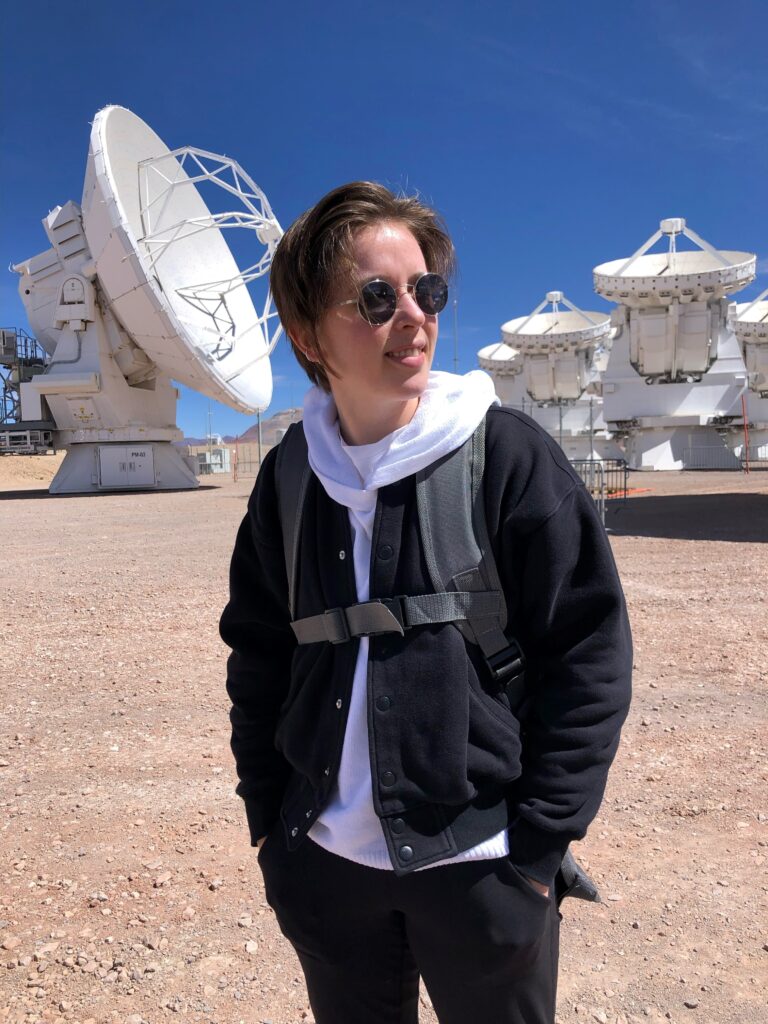
In addition to being a Science Postdoc Fellow, Jess Speedie is also a 51 Pegasi B fellow who received her PhD in astronomy at the University of Victoria, Canada. She is hosted by the Department of Earth, Atmospheric and Planetary Sciences and is working with Richard Teague, the Kerr-McGee Career Development Professor. In her research, Speedie uses a combination of observational data and simulations to study the birth of planets and the processes of planetary formation.
Speedie’s work has focused on understanding “cosmic nurseries” and the detection and characterization of the youngest planets in the galaxy. A lot of this work has made use of the Atacama Large Millimeter/submillimeter Array (ALMA), located in northern Chile. Made up of a collection of 66 parabolic dishes, ALMA studies the universe with radio wavelengths, and Speedie has developed a novel approach to find signals in the data of gravitational instability in protoplanetary disks, a method of planetary formation.
Read the original profile of Jess in the last issue of Science@MIT.
Profiles written by Lyn Nanticha Ocharoenchai